

Baptism
Confirmation
The Holy Eucharist

Reconciliation
Anointing of the Sick
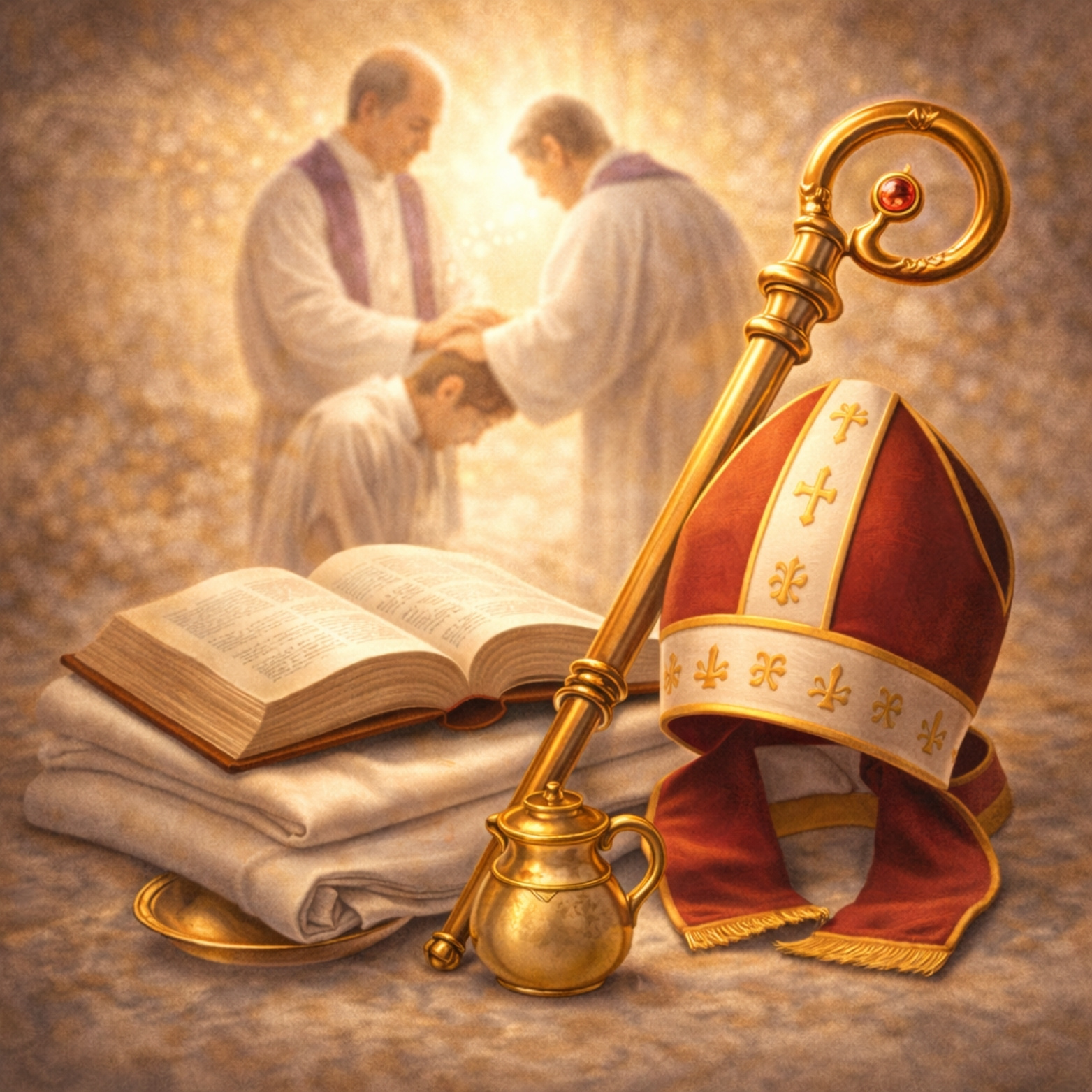
Holy Orders
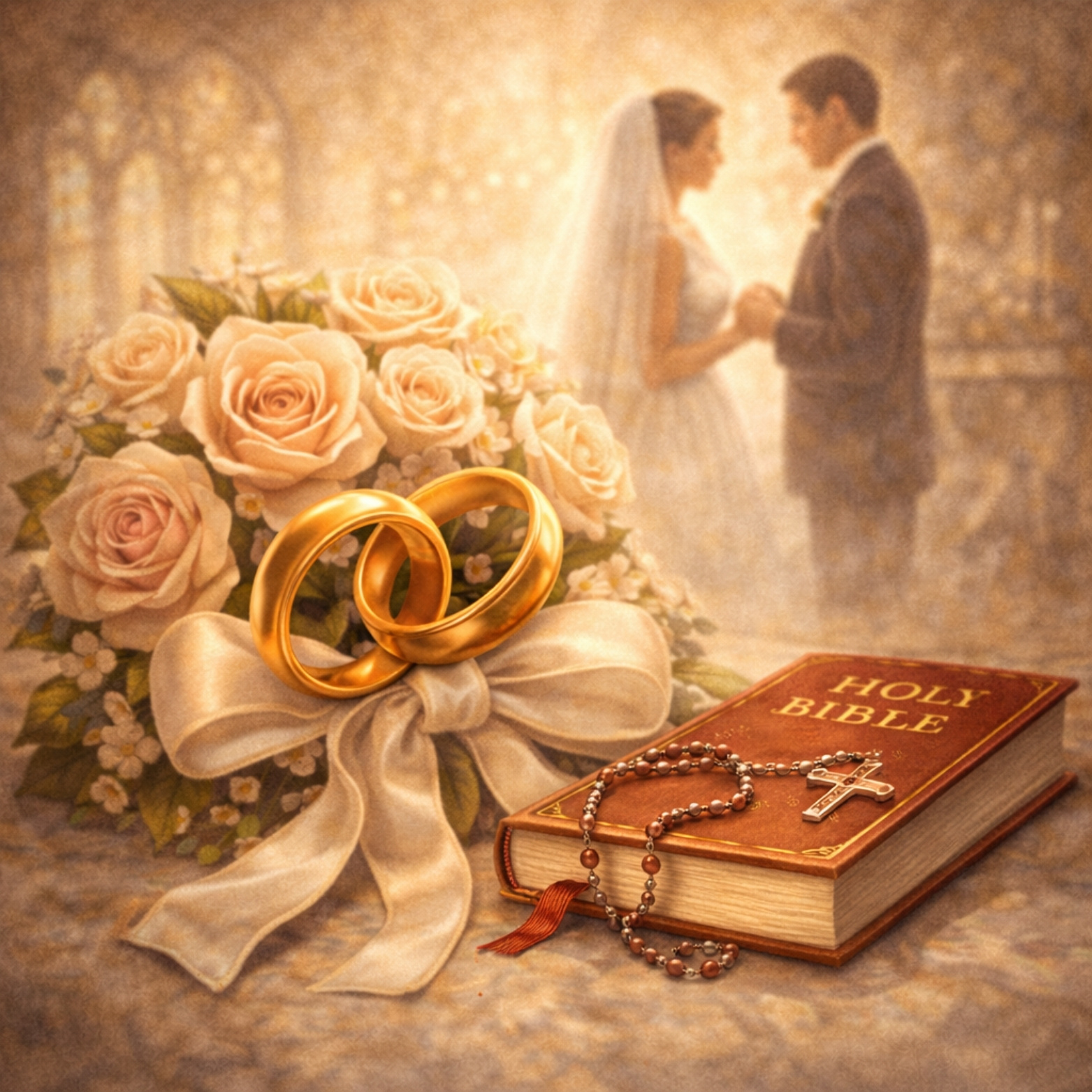
Matrimony
About the Sacraments
What is a Sacrament?
- A Sacrament is a visible sign of an invisible grace, instituted by Our Lord Jesus Christ.
- It is an encounter with Christ, experiencing His love and grace, by the power of the Holy Spirit
- Jesus instituted seven Sacraments. They are: Baptism, Confirmation, Holy Eucharist, Reconciliation, Anointing of the Sick, Holy Orders and Matrimony.
- The seven Sacraments touch all the stages and significant moments of Christian life.
- The first set of stages would be the Sacraments of Initiation: Baptism, Confirmation and Holy Eucharist.
THE SACRAMENTS OF INITIATION
- It is the basis of the whole Christian life, the gateway to the Holy Spirit and the door which gives access to the other Sacraments.
- We are specially chosen and set apart as the children of God.
- We become members of His family in the Church.
- We experience the forgiveness of all of our sins, including original
sin. - We are anointed Priest, Prophet and King, to fulfil our roles and
responsibilities that God calls us to build His kingdom on earth.
- The Holy Eucharist is a celebration that allows us to participate in and become one with the life, death and resurrection of Our Lord Jesus Christ.
- The celebration of the Eucharist the allows us to unite ourselves with the sacrifice of salvation of Jesus.
- The celebration of the Eucharist allows us to partake of the Body, Blood, Soul and Divinity of Our Lord Jesus Christ.
- It is the source and summit of the Christian life.
- In the Eucharist, all other Sacraments find their purpose and meaning. They are all bound up and oriented towards it.
- This Sacrament seals you with the Holy Spirit, ushering you into adulthood in the Christian life. It is necessary for the completion of the Baptismal grace.
- Confirmation binds you more perfectly to the Church and is enriched with the special strength of the Holy Spirit.
- You become true witnesses of Christ and more strictly obliged to speak and defend the Faith, by word and deed.
THE SACRAMENTS OF HEALING
- We all sin in our thoughts, in our words, in our deeds and in what we fail to do.
- The Holy Spirit, given to us in Baptism, convicts us and leads us to true sorrow for our sins.
- This Sacrament allows us to confess our sins and to be pardoned by God’s mercy for the offence committed through sin.
- This Sacrament allows for the forgiveness of sins, which affects not only our relationship with ourselves and God, but also, our relationship with others and creation.
- Forgiveness of our sins reconciles us once again, as perform our penance and acts of charity for full restoration, due to the consequences of sin.
- By the sacred anointing of the sick and the prayer of the priest, the whole Church commends those who are ill, to the suffering and glorified Lord, that He may raise them up and save them.
- The Church exhorts those anointed, to contribute to the good of the People of God, by freely uniting themselves to the passion and death of Christ.
- This Sacrament of Healing can either, by the will of God, allow the person anointed to be restored to the fullness of health, or allow their souls to be prepared to be received in the loving arms of the Lord our God.
THE SACRAMENTS AT THE SERVICE OF COMMUNION
- This is the Sacrament through which the mission entrusted by Christ to His Apostles continues to be exercised in the Church, until the end of time.
- It is the Sacrament of Apostolic Ministry. It includes
I. Bishop – In whom the fullness of priesthood resides and is considered as representing Apostolic succession.
II. Priest – Sharing in the priesthood of the Bishop, who confers authority and mission of service to the people of God.
III Deacon – One who is charged with authority in assisting the Bishop and priest, in the mission and service of God. - Like Baptism, the Sacrament of Holy Orders creates an indelible character in the person ordained, who, in the person of Christ, is set apart and serves the people of God.
- This Sacrament is a twofold celebration of Covenant.
- It is a Covenant of commitment between and man and a woman for life.
- It is a Covenant between two spouses and God, for the spouses to fulfil their commitments of marriage and family life, in service to the people of God.
- In so doing, God becomes integral in their relationship, blessing and fortifying their resolve, to be able to live out their commitment of love for each other and to family life in the upbringing of their children.
“Amen, amen, I say to you, no one can enter the kingdom of God without being born of water and Spirit.”
— John 3:5